Suzuki PE 250 Fuel Tank: A Practical Guide for Owners and Restorers

If you own a vintage dirt bike like the Suzuki PE 250, chances are you’ve already faced one common issue the fuel tank. Over time, these tanks can become brittle, rusty, or simply unusable after years of storage. Finding the right replacement or fixing the original one isn’t always straightforward, especially if you want to keep the bike reliable without losing its classic feel.
This guide breaks things down in a simple way, so you can understand your options and make the right choice.
Why the Fuel Tank Matters More Than You Think
The fuel tank isn’t just a container it directly affects how your bike runs. A damaged or poorly maintained tank can lead to:
Fuel leaks
Dirt or rust entering the engine
Poor fuel flow
Unexpected breakdowns
For older bikes like the PE 250, these problems are even more common because many have been sitting unused for years.
Common Problems with Suzuki PE 250 Fuel Tanks
1. Rust Inside the Tank
Metal tanks are prone to internal rust, especially if fuel was left inside for a long time. This rust can clog the carburetor and affect performance.
2. Cracks and Leaks
Plastic tanks can develop cracks over time due to aging or exposure to heat and sunlight.
3. Brittle Material
Old tanks often lose flexibility, making them fragile and unsafe for regular riding.
4. Fuel Contamination
Sediment buildup is common in older tanks and can lead to engine issues.
Repair or Replace: What’s the Better Option?
When Repair Makes Sense
You can consider repairing your original tank if:
The damage is minor (small rust spots or hairline cracks)
You want to keep the bike completely original
The structure of the tank is still strong
Common repair methods include:
Rust removal and tank sealing
Epoxy for small cracks
Internal coatings to prevent further damage
When Replacement is the Smarter Choice
Replacement is often better if:
The tank has severe rust or deep corrosion
There are large cracks or leaks
The tank has become too brittle
In many cases, a replacement saves time and gives you peace of mind, especially if you actually ride the bike.
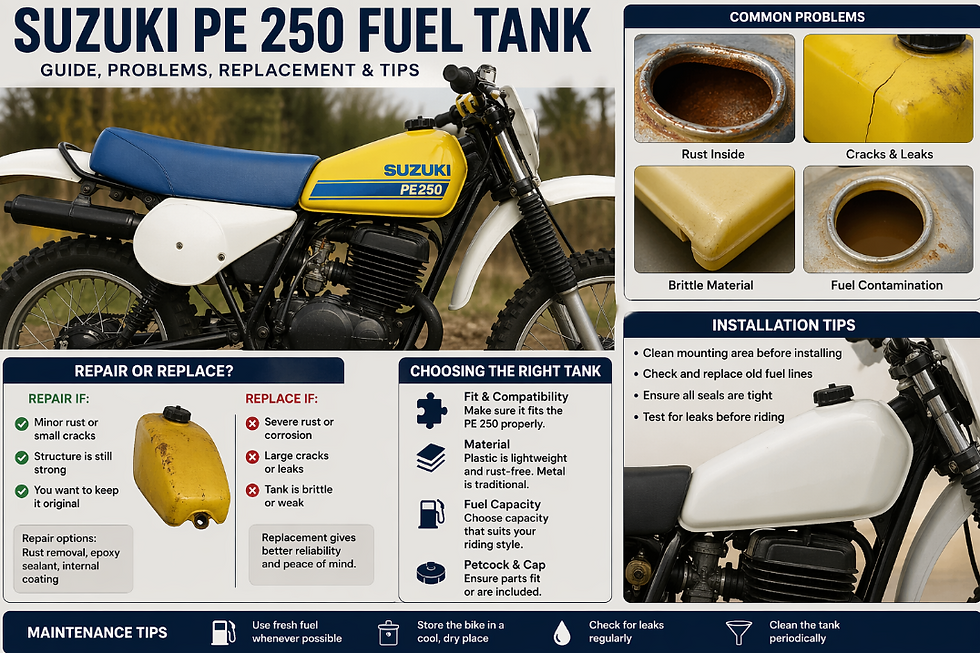
Choosing the Right Replacement Tank
Not all tanks are the same, so it’s important to choose carefully.
Key Things to Look For:
Fit and Compatibility
Make sure the tank is designed specifically for the PE 250 or matches its mounting points.
Material Type
Plastic tanks are lightweight and rust-free
Metal tanks are more traditional but require maintenance
Fuel Capacity
Check if the capacity suits your riding style especially for longer rides.
Petcock and Cap Compatibility
Ensure your existing parts will fit or come included.
Practical Tips for Installation
Installing a fuel tank isn’t complicated, but a few small details can make a big difference:
Clean the mounting area before installation
Check fuel lines and replace them if they’re old
Make sure all seals are tight to prevent leaks
Test for leaks before riding
Taking your time here can prevent bigger problems later.
Real-World Use: Restorers vs Riders
Different users have different priorities.
For Restorers
If you’re restoring a bike for collection or display:
Original tanks are often preferred
Repairs and refinishing are common
Authentic look matters more than daily usability
For Riders
If you actually ride your PE 250:
Reliability is more important than originality
A modern replacement tank can be a better option
Less maintenance means more riding time
Common Mistakes to Avoid
Here are a few mistakes many people make:
Ignoring internal rust – It will eventually damage your engine
Buying the wrong fit – Not all tanks labeled “compatible” actually fit well
Skipping cleaning before installation – Dirt can cause immediate issues
Over-tightening bolts – This can crack plastic tanks
Avoiding these small mistakes can save you money and frustration.
Frequently Asked Questions (FAQs)
1. Can I clean a rusty fuel tank myself?
Yes, light rust can be cleaned using DIY methods like vinegar or specialized cleaners. For heavy rust, professional treatment is better.
2. Are plastic tanks better than metal ones?
Plastic tanks don’t rust and are lighter, but metal tanks may be preferred for originality in restorations.
3. How do I know if my tank needs replacement?
If you see deep rust, leaks, or the material feels weak and brittle, replacement is usually the safest option.
4. Will a replacement tank affect bike performance?
Not directly, but a clean and properly functioning tank improves fuel flow and overall reliability.
5. Can I use any fuel tank for the PE 250?
No, it’s important to use a tank designed for proper fitment to avoid installation and performance issues.
Dealing with a Suzuki PE 250 fuel tank is something almost every owner eventually faces. Whether you choose to repair the original or go for a replacement, the key is to focus on safety and reliability.
A well-maintained fuel tank doesn’t just protect your engine it keeps your riding experience smooth and stress-free. Take your time, choose wisely, and your vintage bike will thank you for it.


Comments